
 Sahityika Admin
UNICEF and the Mothers
(Six inspirational stories about mothers around the world)
This article is copied from the UNICEF portal, to create social awareness.
“Mothers are an inspiration every day of the year. For Mother’s Day, be inspired by these short stories about mothers who do everything they can to keep their children safe, healthy and happy.”
Vanuata
Only one month old, and baby Lydia has already lived through a cyclone. But she might not have if it weren’t for the fast thinking actions of her mum. Cecil wrapped her daughter in a blanket and then the two of them made a lucky escape through the window, sheltering from Cyclone Harold at a neighbour’s house.
Cyclone Harold caused widespread destruction after making landfall in Vanuatu on April 6. COVID-19 makes the response to the cyclone particularly challenging. Even in normal times, travel and logistics across the vast Pacific region are difficult. Now, emergency response supplies need to spend three days in quarantine before they are dispatched to affected regions.
*******
Yemen
Iftikhar cradles her son, Hassan, in the neonatal intensive care unit. Though a newborn, he has already borne the brunt of the ongoing humanitarian crisis in Yemen. Holding “The war got worse, all the people around us were killed in an airstrike,” says Iftikhar, holding her son closer. “So we fled, with nothing. I did not know then that I was pregnant.”
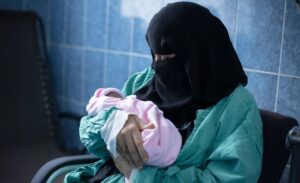
It was then that Iftikhar sold her gold earrings so they could afford to rent a tiny room on the outskirts of Sana’a. One day while hauling water back to their room, Iftikhar started to bleed – there was a problem with her placenta. She was rushed to the hospital and delivered a tiny baby boy who was fighting for his life.
Despite the conflict continuing around her, Iftikhar pours all of her energy into getting her baby, hoping he will be well enough to leave the hospital. “I was so happy when I realised I was pregnant,” she said. “I felt the whole world became mine. We have a baby. He will be well. He will come home with me.”
COVID-19 could be devastating if the outbreak grows in Yemen, with a first case of the virus identified in mid April. Yemen’s healthcare system is already on the brink of collapse leaving little capacity to respond to a pandemic. UNICEF and partners have tried to keep the health system functioning but still, only 51 per cent of health facilities are operational.
*******
Pakistan
Mother Guli’s newborn, Bhagwati, was unwell and she was very worried. Being from a poor family of farmers, there wasn’t much she could do to help.
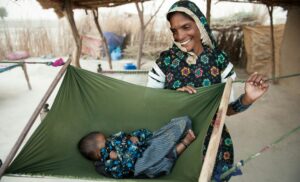
“UNICEF came to help us,” she remembers. Her daughter was diagnosed with severe acute malnutrition and spent 12 days being treated at a hospital. “They gave us food and provided timely assistance which helped her get better,” she explains.
Things were touch and go for a while, but her daughter is healthy and happy now. “I couldn’t be happier to see my child heading towards a healthier life. She’s thankfully so more active and playful now and I’m very happy to witness the change in her.”
COVID-19 could lead to a food crisis of catastrophic proportions. Some children are already facing food shortages, now they are facing a deadly disease.
********
Nigeria
Maryamu was home sick when members of the Boko Haram rebel group attacked the church in her hometown in Nigeria. When she heard gunshots, she grabbed her daughter and ran.
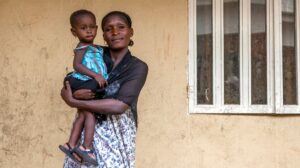
Maryamu has not seen her husband since and fears the worst. In a camp for internally displaced people in Yola, Maryamu and her one-year-old daughter, Hyaladan Yaduku, are receiving medical and school supplies and access to clean water from UNICEF. Maryamu wants to return home when it’s safe – even though she knows there is little left of her former life.
“There is nothing in our house. They took it all,” she said. “We had a motorcycle and many cows. It’s all gone.”
*******
Indonesia
Baby Luthfi was born just six days after the 7.5 magnitude earthquake and tsunami that devastated Central Sulawesi in Indonesia. Sarifah was heavily pregnant at the time. “I fell hard on the ground, landing on my stomach,” she remembers.
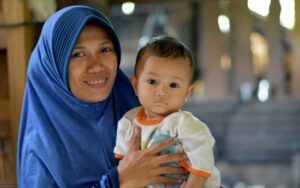
In the weeks after the earthquake, the local government had distributed baby formula. To begin with, this was how Sarifah fed her newborn. She didn’t want to “waste the aid” her family had been given. It wasn’t long before her UNICEF-trained midwife, Fatimah, intervened and taught her the importance of breastfeeding.
Six months later, Fatimah is pleased to see how well baby Luthfi is doing. “Luthfi is growing healthy and strong,” says Fatimah.
As part of its emergency response to the COVID-19 pandemic in Indonesia, UNICEF is working with the government to provide support and guidelines for distance learning and child protection while schools are closed.
********
Binta, Chad
Binta and her family fled their home in north-eastern Nigeria when her village was targeted by Boko Haram.
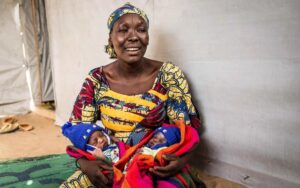
Binta Mahamadou cradles her twin son and daughter inside her family’s tent shelter at the Dar es Salam refugee camp© UNICEF/UNI185044/Cherkaoui
“On the morning of the attack, we fled to the boats and went to Chad. I was close to giving birth but I had no idea that they were twins. I had to go to the hospital to give birth. I was very afraid of losing them.”
“Today I’m fine, and when I look at my little twins, healthy, I feel blessed. We are all survivors here.”
*******
Neveen, Gaza
Neveen’s husband passed away in a blast that hit a UN run school in Gaza. . The blast wounded three of her children, including 6 year-old Rosol, and left Neveen with a permanent disability Now, responsible for raising her four children alone, Neveen’s main concern is their health.
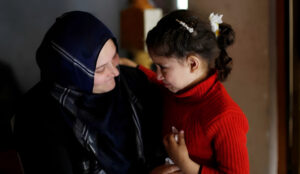
“[Rosol] saw a lot of things – people injured with missing hands or legs, with wounded faces and eyes. She also saw her father killed. This was shocking for her. It had serious psychological effects on her.” She brings three of them to receive psychosocial support from a counsellor working for UNICEF partner The Palestinian Centre for Democracy and Conflict Resolution.
*******
Amira, Germany
Amira and her family are refugees from Homs, Syria. In 2015, they made the weeks-long journey from Turkey by land and sea to Germany where they filed for asylum.
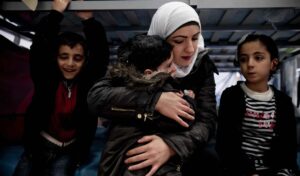
Despite the hardship and violence, they’ve faced, Amira and her husband, Khalid, are careful to stay strong and positive for their children.
“The scariest part was the water crossing. We managed to put all three kids to sleep before the boat left, and used our bodies as shields between them and the sea so they couldn’t see the water… We had to master our emotions, so we didn’t transmit our fear to the kids.”
Amira has big dreams for the future of her family – and plans to work hard to make them come true. “We’re very determined – all of us – to go to school and master German. Twenty years from now, I hope that people around the world will talk about our family and the challenges that we faced and the successes we achieved.”
*******
Syria
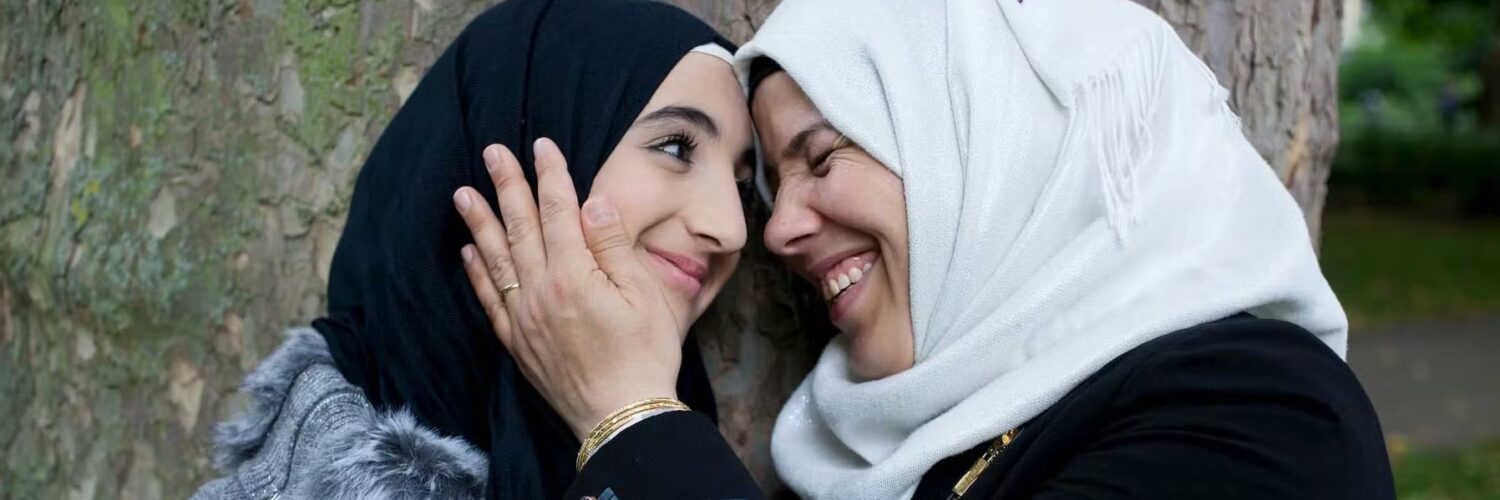
Hind and her daughter Nabila, 13, relax in a London park. Hind and her family fled the war in Syria and resettled in Scotland, before moving to England, after her husband made the difficult journey to Europe.
As coronavirus spreads around the world, we are all vulnerable. But for refugee families already struggling with little shelter or access to clean water, such as those in Syria and Bangladesh, the threat from COVID-19 is monumental.
Source, and Acknowledgement:
** Six inspirational stories about mothers around the world | UNICEF Aotearoa
** https://www.unicef.org.au/stories/7-of-the-most-courageous-mothers-you-ll-ever-meet?srsltid=AfmBOopIpZRIftsIzV6LjAH60urUjfi-e-CEXswDHkQIm5oTgXGWSust
********





Mother Child relation is the strongest and most robust prime mover of our global human race . The articles presented above show that this relation is uniformly bright throughout the globe even today when we see so many wars and brutality. For me every day is a Mother’s day. Because I believe this relation is operative at every corner of the globe 24X7. I am glad that Asim has taken the trouble to include this presentation in Sahityika.